
 Croatia
 Bosnia and Herzegovina
 Serbia
 Crna Gora
 North Macedonia
 Ukraine
 Albania
 Kosovo
 Austria
 Deutschland
 Switzerland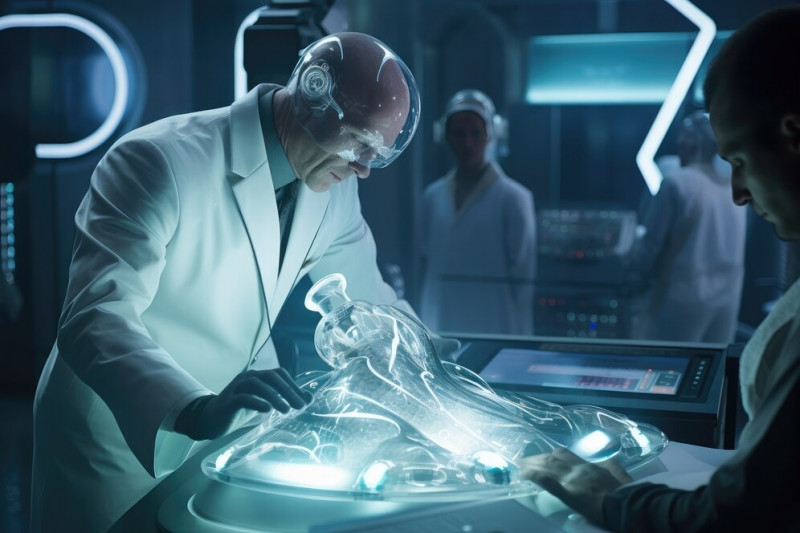
"Robots will surpass good human surgeons within a few years, and the best among them within about five years," said Musk, responding to a post by Maria Nawfal, an entrepreneur in blockchain and new technologies.
Robots in Operating Rooms: From Assistance to Excellence
Musk's prediction is based on concrete examples from practice. Neuralink, his company developing technologies to connect the human brain and computers, uses specialized robots to precisely insert electrodes into the brain — a task that requires speed and precision beyond what the human hand can achieve.
This trend is also confirmed by recent tests of the Hugo robotic surgical system, developed by the medical company Medtronic. During 137 prostate, kidney, and bladder surgeries, the robot achieved impressive results: minimal complication rates and an overall success rate of 98.5 percent — above the standard target of 85 percent.
Technology Sets New Standards
According to reports, the Hugo robot showed better results than traditional methods in almost all categories. For example, the complication rate for prostate surgeries was only 3.7 percent, and for kidney surgeries, even lower — 1.9 percent. Even in more complex procedures on the bladder, complications were below expected limits.
However, experts emphasize that, although the technology shows exceptional potential, robots will not immediately replace surgeons. The reality is that, at least in the foreseeable future, robots will become key, but still auxiliary members of medical teams — "very expensive metal assistants," as Nawfal describes them.
In 137 tested surgeries, only two cases required a return to traditional surgical methods due to device failure or specific complications with the patient.
Challenges on the Path to Autonomous Surgery
Current systems like Medtronic’s Hugo or the popular da Vinci robot still operate under the supervision of surgeons. Autonomous surgery, where robots could make decisions independently during surgery, remains a challenge due to the complexity of human anatomy and the ethical dilemmas that operators must take into account in real-time.
Musk's vision for the medical sector, where the precision of machines will surpass human intuition and experience, does not question the importance of the human factor but opens space for redefining the role of doctors in the future.
Technological innovations are relentlessly changing the medicine we know. Although it is difficult to predict the exact pace of these changes, it is clear that robots are already pushing the boundaries of what is possible in surgery. Musk's predictions may sound ambitious, but with such results, the question is not whether robots will surpass humans in some segments of medicine, but when this will become the new everyday reality.